Create Your First Project
Start adding your projects to your portfolio. Click on "Manage Projects" to get started


Big Business Entrepreneurs
Project type
Existing Brand Transformation
Building a brand bigger than its founder.
BBE had grown into a successful business coaching company with multiple programmes, products and experiences. But the brand hadn’t grown at the same pace. Its identity felt dated, the programme portfolio had become fragmented, and much of the equity still sat with founder Adam Stott rather than BBE itself.
The business was ready for its next stage of growth. The brand needed to become an asset in its own right.
This wasn’t simply a rebrand. It was a rethink of how BBE looked, behaved, communicated and was experienced, from the master brand through to its programmes, physical spaces and internal culture.
01 — THE MOTHER BRAND
From founder-led to brand-led.
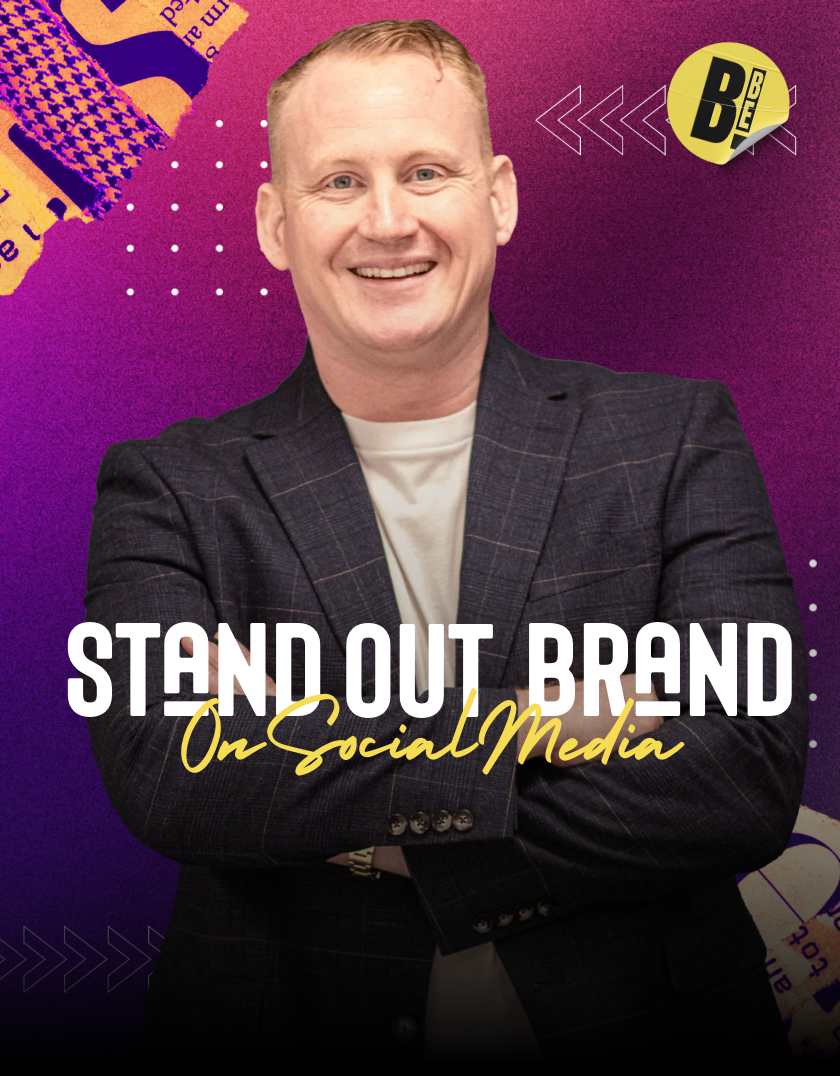
Adam had played an important role in building BBE. His profile, personality and reputation brought people into the business, but long-term growth meant creating equity beyond the individual.
Adam could remain part of the story without being the whole story. BBE was repositioned around the business itself: its purpose, personality, programmes and community. The identity was completely rebuilt, introducing a new visual language, colour system, typography, tone of voice and personality capable of carrying a much more ambitious organisation.
Founder and company became two connected brands, each with a role to play, rather than one relying on the other.
02 — THE PROGRAMMES
One business. Multiple products. One recognisable brand world.
BBE wasn’t selling one thing. It had a growing portfolio of coaching programmes, each with different propositions, audiences and price points. Over time, those programmes had developed identities of their own. The result was complexity without enough connection.
The portfolio was restructured and the programme brands redesigned to create clearer propositions and a stronger relationship with the BBE master brand. Each could have its own personality and presence, but they now felt unmistakably part of the same family.
Different products shouldn’t mean different brands competing for attention.
03 — THE EXPERIENCE
Making an intangible product feel tangible.
Business coaching presents an interesting brand challenge. Clients can invest significant sums into a programme, but unlike buying a physical product, there is very little to hold in your hands.
So the brand experience became part of the product. If the product couldn’t be held, the brand experience could be.
A merchandising strategy brought physicality to the programmes through branded materials, clothing and member touchpoints, creating a stronger sense of arrival, belonging and value.
Editorial content added another layer, including magazine and newspaper-style pieces that turned the people, ideas and stories within BBE into something clients could engage with beyond the coaching room.
The objective wasn't to put a logo on more things. It was to make membership feel like something.
04 — FROM SCREEN TO SPACE
The brand had to live beyond the logo.
The new identity was carried across the wider BBE experience: digital, content, events, merchandise and physical environments.
Interiors brought the personality of the brand into the spaces where clients and teams actually experienced it. Creative systems brought greater consistency to how the organisation communicated. Brand guidelines created a framework for maintaining it as the business continued to grow.
Every touchpoint became part of the same story.
05 — INSIDE BBE
You can’t build a strong external brand with a disconnected internal one.
A transformation of this scale couldn't live solely with the marketing team. Internal branding became a significant part of the work, helping teams understand the new positioning, personality and standards behind BBE and giving the organisation clearer systems for how the brand should show up day to day.
The ambition was consistency without rigidity: giving people enough structure to protect the brand, while still allowing the personality of the business to come through.
The people delivering the experience had to believe in the brand as much as the people buying it.